Part 1 – Indian Airlines, outstanding incompetence.
When I land in New Delhi from Mumbai, it is as if the pilot must have made a mistake and landed at Kuwait or Dubai airport instead. But no, this is Delhi all right, no artificial glitter or shiny marble floors where you can almost see your jetlagged face or evaporated lip gloss here. When GoAir cabin crew had on landing announced outside temperature is 48 Celsius, I did not realize how hot that could be, Fahrenheit being more established for me; that is 118F!!! It feels I have opened an oven door and is difficult to breathe, even. Thankfully, the airport terminal is nicely cool; I console myself I am here for a few hours only anyway; my Indian Airline flight to Kabul is only about 2 hours away.
IC843 to Kabul is announced almost on time and we go through motions of a secondary security check by bored security men; mine waves me through without even opening my bag. When everybody is on board, I quickly jump seats to an empty bulkhead aisle seat; more legroom. 12:35 passes and I look forward to us taking off; the air-condition will kick in and I am hungry. But nothing happens and the pumped cool air becomes increasingly unfriendly warmer. After about an hour, the pilot comes alive and says there is a “slight” technical problem and we are “slightly” delayed. Another 30 minutes pass, babies begin wailing, children start fretting and adults begin conversing in an increasingly loud tenor. The man across from me begins to pick his nose, tentatively at first and then in earnest, positioning his face at every angle to get maximum leverage; I look away.
As I am seated in the first row after business class, I get to hear snippets of what happens in business class and all activity outside the cockpit further up. I learn the Indian Ambassador to Afghanistan is onboard, with a group of 6 bodyguards. There is constant talk of a strike by the lethargic and non-responding airhostesses but I do not fathom what this means. 2 hours after departure time, the technical problem is apparently fixed as doors shut and the aircraft slowly limps towards an active runway. Once lined up on the active runway, the engines rev up nicely, the aircraft strains forward for release when abruptly, the pilot eases takeoff thrust and the bird idles once more; we quickly taxi back towards a parking bay.
Tempers are now flying, mine included, although I am very relieved that the pilot aborted flight if the aircraft was not air worthy. Apparently, word is circulating that IC843 was cancelled yesterday for the same “technical” reason and non Delhi passengers were accommodated in some shabby hotel near the airport. Few of these passengers, Afghani teenagers, now storm forward and demand to be taken off an ailing aircraft, they have had enough. There is much argument by the door but I cannot make out what is said. The dissenters troop back to their seats after a while, grimfaced; they were denied permission to disembark. So we sit and wait, and wait and wait but no word from anyone regarding future plans. Babies begin wailing, children start fretting, there is loud talk about how unfairly Indian Airlines treat their customers; the guy across from me resumes snot picking.
I may have earlier mentioned in my prior blogs that I am, by nature, quite an impatient person, always in hurry. I cannot just sit still, without knowing I have no other choice. However, CAI and working in Afghanistan has forced me to accept the virtue of patience; up to a limit. When there is no communication from IA crew again the next 30 minutes, it is I that storm past the curtain barrier that divides business from cattle class. I round up on an aging stewardess with a sagging gut protruding through standard IA saree uniform flipping through a filmy magazine; our conversation goes something like this:
Madam, would you please care to tell me what is going on? She reluctantly lifts heavy makeup coated eyelids towards me and looks me up and down; is not impressed, for her attention reverts back to the magazine. Technical snag, she rasps, apne seat pe beth jao (return to your seat and sit down). My mind snaps and I see bloody red. Before the old cow can lift another page, I step forward and slap my hand on the magazine. She jumps, 2 other stewardesses lolling around jump, the ambassador sitting nearby probably jumps. I am asking you a question, ma’am, and you ignore me with this outrageous attitude of yours? We have been holed up in this aircraft now for 3 hours and all you can tell us there is a technical snag? It is hot in here, there are children and babies here, you have not offered us any food, not even water, is this the best IA can do? What do you think, we are cattle for you?
There is stunned silence for a while; I wait to be arrested for my action but most people in business class nod their heads and mummer their agreement with my assertion; this probably saves me. A much younger airhostess with a much firmer gut approaches me and tries to calm me down. Sir, we understand your discomfort but we cannot do anything. It is in the hands of operations, they make all decisions, you will have to ask them. And where are the operations people, I demand. We don’t know. Who knows where they are? We don’t know. Is this flight cancelled? We don’t know. When will you know? We don’t know. When will we be let go from the aircraft? We don’t know. Where is the captain? Uh, we don’t know.
I know when I am defeated so head back to my seat with my tail between my legs and sit down, fuming. But then, only about 5 minutes later, we are ordered off the aircraft and returned to the terminal on a bus. There is another technical snag however. All of us have been processed by immigration as having left the country so there is much confusion between operations and immigration with some shouting between them while we toast and profusely sweat outside terminal doors. It takes a woman officer to point out that there are babies and young children in the crowd that may be medically compromised due to the heat before the doors swish open and we enter the blissful cool inside of the airport terminal.
After much arguments, discussions, an hour and an almost fistfight later, IA cancels flight 843 to Kabul for the 2nd time in so many days; I begin to worry much. I have a non cancellable chartered flight at 7AM tomorrow morning from Kabul to YawKawlang and a drive to Sulej for a wedding of 59 poor couples sponsored by donors of CAI. I frantically call up Wasi in Kabul; as practical and pragmatic as any Afghan can be, he tells me I will not be able to attend the wedding; Basheer will represent CAI. He also asks me to get mentally prepared for an 18 hour drive to YawKawlang the day after (more on this escapade in later parts of this blog). We are processed by immigration quite efficiently; our exit stamp is cancelled and we end up in the customs holding area where another argument between IA and customs ensue. Customs wants us all removed while IA pleads there is no other place they can take us.
There is total mayhem when it is learnt that IA staff have gone on countrywide strike and we are abandoned; thankfully, senior IA staff take over and begin a laborious task of assigning non Delhi residents a hotel room for the night. Tomorrow is Wednesday, the only day of week when IA does not have services to Kabul, but that is insignificant; the strike worries me more. An agreement is struck whereby KAM Air (a local Afghan airline not certified by IATA) will take about 52 of us to Kabul tomorrow. And what about the rest? The senior IA manager I talk to can only shrug his thin shoulders; I want to strangle him until he consults his list and assures me I am one of those that have been assigned a place on KAM Air. Phew!
We wait some more; it is not until 7PM, six and a half hours from scheduled departure that I get a seat in an oppressively hot bus for a ride to our hotel. Not only is the bus overcrowded with sweaty passengers, the heavy luggage we have brought up is strewn around wherever there is place. The bus is incredibly hot, with a lot of people, exhausted children and reeks of body odor and unwashed bodies. I sweat and sweat and sweat some more. When we arrive at the hotel, I am startled to see a patch of dampness on the front of my trousers, like some map of a continent on an atlas; for a split second, I am horrified I may have soiled myself, but it is just sweat.
I am assigned a reasonable room with an unbelievable surprise; a treadmill! I get temporarily exited. It works but is useless with power cuts every 10 minutes or so. I was liable to kill myself using it with sudden stops at my running speed of 6 mph. I have a shower, eat dinner and fall asleep but power cuts and the generator kicking in every so often makes resting difficult. The next morning, I make a snap decision. There is a Pamir Air flight that afternoon; I decide to cancel the IA ticket and rebook on Pamir. I am not sure how long the strike will last and I am sure no other airline can match IA’s incompetence.
Listen to me IA, it may not make too much of a difference to you, but I will never (I know you should never say never), never, ever fly you again.
I reach Kabul later that day incident free.
To be continued…
Sunday, June 6, 2010

Saturday, June 5, 2010
My tears of blood – Shafiqa Ahmed Hussein

Sacheck village.

Shafiqa's destroyed home.

Shafiqa's destroyed home.

Shafiqa

Shafiqa
This is the story of Shafiqa Ahmed Hussein who I meet in the village of Sacheck, Afghanistan at Imam Sajjad (A) Clinic on May 27, 2010. A demure, pretty woman of 22, Shafiqa tells me the following heart wrenching story of her Dad’s massacre by the Talibaan; here is the story in her own words:
I am Shafiqa Ahmed Hussein, a midwife at CAI sponsored Imam Sajjad (A) Clinic in Sachek, Afghanistan; about 18 hours of hard driving from Kabul. For those not familiar with this general area of Afghanistan, for many, it is probably one of the most remote areas in this world. This village is home to about 9,500 of very poor farmers and sheep herders who can only relax about 5 months of any year; the rest of time is survival of the fittest in severe and bitterly cold snow and ice.
In 2001, I was a happy teenager, daughter of a small shop owner Ahmed, who managed to provide our family with a lifestyle better than most in the village of YawKawlang, about 2 hours drive from Sacheck. At age 12, I was as cheerful and innocent as any teenager her age would be. I went to school with my siblings, sisters Najeeba 15 and Aziza 9 while Mother Hallema stayed at home with Latifa 4 and brother Momin 2, too young for school.
On January 1, 2001, a blistery, bitterly cold day, I was home helping Mum with breakfast so Dad could go and open the grocery store we owned; school was on winter break. At about 10 that morning, while I and the elder sisters cleaned home and prepared for our next meal, Dad came running in, anxiety and fear written all over his ice cold face. We must leave immediately, all of us, he yelled. The Talibaan have entered YawKawlang and arresting people. We will go up the mountains for a few days. Pack up all you can, especially food. We must leave now! Most people have already left, hurry up!
All of us were paralyzed with fear, could not believe nor understand what Dad was on about, which made Dad uncharacteristically mad and irritated. He franticly began stuffing empty boxes with clothes and flour and sugar and cans of cooking oil. The crazed and frenzied looks on Dad’s face jerked Mum into action and then all of us as well. We packed as much as we could carry and some more; Mum wanted to pack the whole house! But Dad, usually a calm and easy going man who gave in to Mum’s occasional whims easily, was very firm and abrupt and ordered Mum to leave everything except warm clothes and food, which made Mum weep. We wore our coats over our home clothes and with wheelbarrows full of boxes, clumsily trekked up through piles of snow and ice into the mountains that surround our village.
We stayed in the mountains for about a week, sometimes with sympathetic animal headers and some days in caves. It was bitterly cold and I remember all of us huddled together for warmth and as security in case our cave was visited by wild wolves. I also remember the days spent in utter boredom, fear and absolute, miserable, bone chilling cold. After about a week, we ran out of food and Dad decided to go back to town to get more and assess the situation. All of us, but especially Mum were not willing to let him leave but Dad, again strangely, roughly told us to be quiet and left the next morning, even before I woke up. We never saw him again, alive or dead.
Dad did not return after a few days, I don’t remember how many now, but they were the most difficult days of my life when I cried tears of blood. Mum was an emotional wreck and my other sisters helpless to do anything for her. Latifa and Momin took cues from Mum and cried along with her. When it was evident something very bad must have happened to Dad and afraid we would die of hunger if food was not imminently available, I decided to take us all back to YawKawlang. We returned to a dead and devastated village. The Talibaan had massacred 351 men and children, from age 7 to 80 in front of our Jamia Masjid on the day we had escaped.
Shafiqa breaks down and weeps long and bitterly at this point. I and my interpreter look away and I ask Basheer who is videotaping this interview, to stop. There is so much emotions a human can take; not a single person in the clinic room is dry eyed at this point. Shafiqa apologizes and continues after regaining composure:
We learnt later that Dad was arrested and sent to a military commander who sentenced him to death for practicing a faith not recognized by the Islamic Republic of Afghanistan. He, along with many others were tied behind their backs using belts or shalwaar strings they wore and then murdered in cold blood with a single shot of a bullet through the back of his head.
There is a bout of bitter weeping again and we break for a short while once more before Shafiqa continues:
A sole survivor of the massacre whom we knew, later informed us about Dad’s murder and possible burial 5 days after the killings when the band of killers departed YawKawlang. A woman went looking for her dad and discovered him in a pile of bodies. She brought all of the bodies to the main masjid and the martyrs were given a mass burial because the bodies had begun to decompose even in the bitter cold of January. We have yet to determine with absolute certainty that Dad is among others in the mass grave but we have no other choice but to assume that is the case.
My tears of blood did not end here; when we finally went home, we found it razed to the ground, with all our contents inside destroyed. My Dad was murdered in cold blood; my Mum, already an old woman at age 23, was a widow with 5 children to support and our house was burnt and destroyed. Time, however, is the best healer of wounds. Although fate had slapped us hard, we regrouped and survived. My Mum is still devastated of course, but resigned to her fate. Najeeba is married; Aziza, Lateefa and Momin all go to school and alhamd’Allah, I support them all. Although we were not allowed to study under Talibaan rule, I still managed to complete high school after which I studied nursing during the day and worked at a local hospital in the afternoon, getting important firsthand experience. This has made me possible to work in an important role of Midwife here at Imam Sajjad (A) Clinic in Sacheck.
I must add that Comfort Aid International is the only NGO or any other organization that has made it possible for a human being a chance to survive here. The clinic is a lifeline for many, many desperate people who would have simply died but for the medicines and our medical services. For example, I had to walk quite a distance today to a home where a full term pregnant woman had vaginal bleeding. I gave her a serum immediately and she stabilized; this woman would have definitely lost her baby had it not been for the medication.
Interview concludes.
The pregnant woman gives birth later that day to a healthy baby girl and both baby and mother are doing well up to the time I leave Shacheck. I go visit Shafiqa’s house afterwards, see the remaining shell of her burnt home and feel immense sadness for this young, unique girl-woman; what she has been through. Remember, this is Afghanistan where women do not work outside of the home to support families. Shafiqa has broken all taboos in conservative, rural Afghanistan by her sheer will for survival. Her entire family depends on her salary for continued existence. At age 22, when most Afghan girls are married and have children, it will be hard for Shafiqa to find a life partner (working outside of home does not help either). But I am sure Shafiqa will survive; she has not shed tears of blood for no reason.
CAI would like to rebuild Shafiqa’s home; it will cost about USD5,000. If you are interested in helping, please visit www.comfortaid.org and click on donate link; make sure your write “Shafiqa Home Fund” as description.
Thursday, May 20, 2010
The New Ahlebeyti Muslims – A revealing experience.
INDONESIA:
The burly Iraqi Faris el Husseini in traditional Arab gown stands out amongst mostly Indonesian crowd at Jakarta International Airport and after introductions, upon knowing I am an East African Khoja, Husseini instantly starts conversing in very acceptable Kiswahili, startling me. Husseini, you see, spent 3 years in Arusha, Tanzania so is quite good with the language. I am in Indonesia on my way to Zamboanga City, Philippines to inspect the first Shia mosque project in the country. We head towards the city where Aagha Seetanis liaison office, which Husseini manages, is located.
The traffic is horrible, simply horrible; drivers in Jakarta must have infinite patience for apart from an occasional blast of horn, the traffic is reasonably orderly and disciplined. I immediately compare it to home city mayhem of Mumbai; it amazes me that that my hearing is still functioning fairly after 2 years of ghastly Mumbai street exposure. The Ahlebeyt (A) Center in downtown Jakarta is a nice 2 story building where Husseini puts in considerable tableegh efforts. Thsee combined tableegh efforts of many worldwide groups in Indonesia are startling; anywhere between 3 to 5 million Indonesians identify themselves as Ahlebeyti Muslims.
Now remember the term “Ahlebeyti” for this is the identifying difference from our cousins Ahle Sunna. The Ustaads (not Sheikhs, Aaghas etc used elsewhere worldwide) who graduated from Qum or elsewhere are identified as Ustaads and a very subtle, gentle approach is adopted in spreading Shia Islam. Indonesians are generally very gentle people; they will avoid any form of confrontation and by and large understand and accept the family of Prophet Muhammed (S). There is no bad mouthing of any personalities, rather, the values and benefits of Ahlebeyt (A) are stressed, analyzed and disseminated; a very powerful and effective method indeed. One day, a local Indonesian visited Husseini and harshly demanded to know if Husseini was a Shia. He replied negatively but stated he was an Ahlebeyti upon which Husseini was warmly embraced and kissed by the man. Go figure.
I visit a fine new home of an Austrian gentleman, an owner of 3 fine restaurants in Jakarta that night; we have been invited to bless the home with Hadees e Kisaa and dinner. A new convert to Shia Islam, this pleasant man whose head competes for lack of hair with mine, is interesting company, for I have not met a convert to Shia Islam from Western Europe before. Also in attendance are 8 orphans that Husseini cares and educates; a pleasant evening indeed.
Next day I visit a distant village where a plot of land has been purchased to build a community center by Husseini and his group. The volcanic soil of Indonesia matched that of Arusha in Tanzania and I see and sense many similarities with by birth country. Indeed, Husseini serves me with fried muhoogo (cassava, yucca) at his home for dinner! Afterwards, we drive to the airport to pick up Abbas Muljiani, one of CAI’s ardent supporters who is joining me for the rest of my trip.
Day 2 is spent spending time (and battling traffic) with local Shia groups in and around Jakarta, including an impressive Iranian setup called Islamic Culture Centre (ICC) - http://www.icc-jakarta.com/; very active in translation and publishing of Islamic works. There is a Dua e Komail session at Hussieni’s setup - Islamic College of Advanced Studies (ICAS) - http://www.icas.ac.id/; where we get to meet and interact with local Indonesian community converts. A dinner is hosted in our honor at this centre by a distant cousin of Abbas Muljiani who has lived in Jakarta for a long time. Hassanbhai is a content man in Indonesia, likes it here, what with guaranteed halal food and Islamic environment. We have a good Pakistani dinner and meet some young Ustaads who explain briefly how they work in the communities and even lead prayers in Sunni mosques. They are interested in knowing about Afghanistan and explain how all events are subdued including the Aashura which is otherwise an event with emotional outbursts. They also mention that there are almost no Shia women who want to work overseas as ‘maids’. There appears to be less Wahaabi type opposition to Ahlebayti tabligh; hijaab is a little odd in Indonesia for women carry a sort of hijab which is slipped over when praying in a mosque. With more literature, Ustaads, websites in local languages, Shia beliefs can be expected to grow over the coming years.
Day 3 we visit a local school headed by a local Shia family and are escorted by Ahmed Afzal, a soft spoken, perpetually smiling man who manages the school (born in Afghanistan but lived in US for a long period and married to an Indonesian), where the teachings of Ahlulbayt (A) are introduced in an academic environment. Abbas John, an Indian national working in Jakarta kindly takes us around this last afternoon before we are driven to the airport for our flight to Manila by Husseini late at night. All very nice and a pleasurable experience.
PHILIPPINES:
The 4 hour early morning flight to Manila is eventless, except trying to figure out when exactly Fajr time set in. We are met at the airport by our good host, a long term businessman and resident. A Saturday, it is a rest day for us for we have been awake almost all night flying.
On Sunday, we drive to Malaccan with Cairoden (Khairudeen) Dimasangca (another Qum graduate active in tableegh efforts) where a donor has sponsored 10 new Shias sustain their flea market businesses. Along the way, we stop at the Ministry of Energy where we meet an interesting gentleman. This man, who heads the Ministry was a rebel with Moro Liberation Front and got this job as part of peace agreement with the government of Philippines. He has translated the holy Quraan in the local dialect of Maranao, a tremendous feat accomplishment. The blackboard in his office is covered with ayaats from the Quaraan and several Quaraans stacked on his desk. A devout Ahlebeyti Muslim, he radiates powerful energy and oratory powers of persuasion in excellent English; a gem that Allah (S), in His wisdom has strategically blessed and placed.
This community in Malaccan, headed by an Abdulrehman was a thriving business community in the island of Mindanao when they were attacked by Wahaabi elements one rainy day while worshipping at a makeshift mosque. The entire community lost their homes, all burnt to the ground, including the mosque and Abdulreman lost a young son; killed. Everybody in the clan fled to Malaccan, Manila and took refuge in a flea market where they started up a flourishing business under the patronage of a sympathetic mayor. Read their story here: http://shiajafaribulacan.multiply.com/photos/album/41/A_short_biography_on_becoming_a_firm_follower_of_Ahlul_Bayt_as_
Fate tested them once more in early 2009 when devastating floods wiped out their small business fortunes and they were penniless and homeless twice over in 2 years. Abdulrehman survived by sleeping 3 nights on a single supporting beam of the market while others fled to higher grounds. After they regrouped, Abdulrehman’s Imam found CAI website and appealed for help. I was fortunate to visit Philippines in October that year and was blessed once more to secure a donor who readily helped.
We are greeted by the beneficiaries of the sponsor program and spend some time going through their stalls, encouraging them to refrain from trades that involve music and movies. The sponsored businesses have received a loan of USD1,000 which they must repay in 10 monthly installments. Every month, a new beneficiary gets USD1,000 from repayment of the installment; this way we will insha’Allah cover the entire 70 plus individual seeking assistance; eventually. The community has a makeshift mosque within the flea market where we pray Zohar and then feast on a homemade delicious lunch. We fly to Zamboanga City the next day.
We are met at the airport by the trustees of Imam Mahdi (A) mosque project, headed by their Imam and mentor, Abu Mahdi, a Qum graduate. This first ever Shia mosque in the Philippines is well under construction; busy with construction equipment strewn about. Unfortunately, the old building used as a mosque/madressa and everything else had to be demolished to make way for the masjid so we study and discuss the project at our hotel room. Along the way we stop at a fruit market that had stunned me last visit and this time around was no exception. As a fruit lover, this market is paradise with an array of color and every fruit imaginable on sale; we (I) splurge.
At the hotel, expectations and budgets are set, suggestions offered. CAI donor is footing the entire bill for the first phase of a comprehensive mosque cum hawza / madressa project so they are still in need for considerable funding. Channel 41 at the hotel beams a lecture by Abbas Virjee (Abbasbhai had just met him on his Muscat – Doha flight few days ago!); we were pleasantly very surprised. Lawrence Martin Ebojo (now Qasim) manages to download videos through internet at night and deliver to the local cable operator to broadcast, here, in a remote part of Philippines. Subhaan’Allah, the planning of Allah (S) and the miracles of internet! Abbasbhai may be able to help with a CD duplicator and provide additional broadcasting material. We have a greasy dinner of fried chicken / fish at a local Muslim owned restaurant and retire for the night.
Next morning, we hire a motor boat and ride about 40 minutes to the Island of Santa Cruz where clusters of new convert Shia Muslims live. A poor community that relies exclusively on fishing, these are remarkable people; even in the mist of poverty, a small mosque beckons; inside, a blackboard boldly, proudly proclaims Imam Ali (S) wilaayat. We tour the island and come across a tiny open shack with cracked and torn thatched roof - a school; children actually learn here! Abbasbhai kindly agrees to put in a more permanent roof and repair the structure somewhat.
We meet a young girl skillfully breaking open nasty looking live Sea urchins with poisonous needle like projections and extracts the flesh; these probably sell for about 200 pesos for an entire bowl. Considering this to be possibly an important source of income, Abbasbhai does not have the heart to advise her Sea urchin flesh may be haraam to consume or sell. After touring the island some more, we return to Zamboanga City for a leisure, delicious lunch after salaat at Abu Mahdi’s home (with more fruit included, of course).
CAI has started an Education sponsorship scheme as there are many children who are unable to pursue further education due to funding; small amounts required as evidenced by detailed forms filled shown to us over lunch and insha’Allah, 22 students will benefit immediately.
It appears Philippines will insha’Allah have aalims who can be expected to impart the right knowledge over the medium term for increasing the number of Ahlebeyti followers in the midst of a nation where women mostly wear are scantily dressed and exploited but hunger for the truth and safety that Islam offers.
It is to the airport in the evening and to Manila that night for a midnight flight to Dubai and Dar es Salaam for me; Abbasbhai will fly later tomorrow evening to Muscat via Doha. For us who are fortunate to be able to travel far and wide, these trips are eye openers to Allah (S) vast earth, and its diverse global Muslim communities, particularly her ever budding and expanding Ahlebeyti followers. Just imagine, I believed we Khojas were “it”. Subhaan’Allah.
Please click here to view some sample photographs of our trip:
http://picasaweb.google.com/booaliboo/IndonesiaPhilippines#5473206293917814514
The burly Iraqi Faris el Husseini in traditional Arab gown stands out amongst mostly Indonesian crowd at Jakarta International Airport and after introductions, upon knowing I am an East African Khoja, Husseini instantly starts conversing in very acceptable Kiswahili, startling me. Husseini, you see, spent 3 years in Arusha, Tanzania so is quite good with the language. I am in Indonesia on my way to Zamboanga City, Philippines to inspect the first Shia mosque project in the country. We head towards the city where Aagha Seetanis liaison office, which Husseini manages, is located.
The traffic is horrible, simply horrible; drivers in Jakarta must have infinite patience for apart from an occasional blast of horn, the traffic is reasonably orderly and disciplined. I immediately compare it to home city mayhem of Mumbai; it amazes me that that my hearing is still functioning fairly after 2 years of ghastly Mumbai street exposure. The Ahlebeyt (A) Center in downtown Jakarta is a nice 2 story building where Husseini puts in considerable tableegh efforts. Thsee combined tableegh efforts of many worldwide groups in Indonesia are startling; anywhere between 3 to 5 million Indonesians identify themselves as Ahlebeyti Muslims.
Now remember the term “Ahlebeyti” for this is the identifying difference from our cousins Ahle Sunna. The Ustaads (not Sheikhs, Aaghas etc used elsewhere worldwide) who graduated from Qum or elsewhere are identified as Ustaads and a very subtle, gentle approach is adopted in spreading Shia Islam. Indonesians are generally very gentle people; they will avoid any form of confrontation and by and large understand and accept the family of Prophet Muhammed (S). There is no bad mouthing of any personalities, rather, the values and benefits of Ahlebeyt (A) are stressed, analyzed and disseminated; a very powerful and effective method indeed. One day, a local Indonesian visited Husseini and harshly demanded to know if Husseini was a Shia. He replied negatively but stated he was an Ahlebeyti upon which Husseini was warmly embraced and kissed by the man. Go figure.
I visit a fine new home of an Austrian gentleman, an owner of 3 fine restaurants in Jakarta that night; we have been invited to bless the home with Hadees e Kisaa and dinner. A new convert to Shia Islam, this pleasant man whose head competes for lack of hair with mine, is interesting company, for I have not met a convert to Shia Islam from Western Europe before. Also in attendance are 8 orphans that Husseini cares and educates; a pleasant evening indeed.
Next day I visit a distant village where a plot of land has been purchased to build a community center by Husseini and his group. The volcanic soil of Indonesia matched that of Arusha in Tanzania and I see and sense many similarities with by birth country. Indeed, Husseini serves me with fried muhoogo (cassava, yucca) at his home for dinner! Afterwards, we drive to the airport to pick up Abbas Muljiani, one of CAI’s ardent supporters who is joining me for the rest of my trip.
Day 2 is spent spending time (and battling traffic) with local Shia groups in and around Jakarta, including an impressive Iranian setup called Islamic Culture Centre (ICC) - http://www.icc-jakarta.com/; very active in translation and publishing of Islamic works. There is a Dua e Komail session at Hussieni’s setup - Islamic College of Advanced Studies (ICAS) - http://www.icas.ac.id/; where we get to meet and interact with local Indonesian community converts. A dinner is hosted in our honor at this centre by a distant cousin of Abbas Muljiani who has lived in Jakarta for a long time. Hassanbhai is a content man in Indonesia, likes it here, what with guaranteed halal food and Islamic environment. We have a good Pakistani dinner and meet some young Ustaads who explain briefly how they work in the communities and even lead prayers in Sunni mosques. They are interested in knowing about Afghanistan and explain how all events are subdued including the Aashura which is otherwise an event with emotional outbursts. They also mention that there are almost no Shia women who want to work overseas as ‘maids’. There appears to be less Wahaabi type opposition to Ahlebayti tabligh; hijaab is a little odd in Indonesia for women carry a sort of hijab which is slipped over when praying in a mosque. With more literature, Ustaads, websites in local languages, Shia beliefs can be expected to grow over the coming years.
Day 3 we visit a local school headed by a local Shia family and are escorted by Ahmed Afzal, a soft spoken, perpetually smiling man who manages the school (born in Afghanistan but lived in US for a long period and married to an Indonesian), where the teachings of Ahlulbayt (A) are introduced in an academic environment. Abbas John, an Indian national working in Jakarta kindly takes us around this last afternoon before we are driven to the airport for our flight to Manila by Husseini late at night. All very nice and a pleasurable experience.
PHILIPPINES:
The 4 hour early morning flight to Manila is eventless, except trying to figure out when exactly Fajr time set in. We are met at the airport by our good host, a long term businessman and resident. A Saturday, it is a rest day for us for we have been awake almost all night flying.
On Sunday, we drive to Malaccan with Cairoden (Khairudeen) Dimasangca (another Qum graduate active in tableegh efforts) where a donor has sponsored 10 new Shias sustain their flea market businesses. Along the way, we stop at the Ministry of Energy where we meet an interesting gentleman. This man, who heads the Ministry was a rebel with Moro Liberation Front and got this job as part of peace agreement with the government of Philippines. He has translated the holy Quraan in the local dialect of Maranao, a tremendous feat accomplishment. The blackboard in his office is covered with ayaats from the Quaraan and several Quaraans stacked on his desk. A devout Ahlebeyti Muslim, he radiates powerful energy and oratory powers of persuasion in excellent English; a gem that Allah (S), in His wisdom has strategically blessed and placed.
This community in Malaccan, headed by an Abdulrehman was a thriving business community in the island of Mindanao when they were attacked by Wahaabi elements one rainy day while worshipping at a makeshift mosque. The entire community lost their homes, all burnt to the ground, including the mosque and Abdulreman lost a young son; killed. Everybody in the clan fled to Malaccan, Manila and took refuge in a flea market where they started up a flourishing business under the patronage of a sympathetic mayor. Read their story here: http://shiajafaribulacan.multiply.com/photos/album/41/A_short_biography_on_becoming_a_firm_follower_of_Ahlul_Bayt_as_
Fate tested them once more in early 2009 when devastating floods wiped out their small business fortunes and they were penniless and homeless twice over in 2 years. Abdulrehman survived by sleeping 3 nights on a single supporting beam of the market while others fled to higher grounds. After they regrouped, Abdulrehman’s Imam found CAI website and appealed for help. I was fortunate to visit Philippines in October that year and was blessed once more to secure a donor who readily helped.
We are greeted by the beneficiaries of the sponsor program and spend some time going through their stalls, encouraging them to refrain from trades that involve music and movies. The sponsored businesses have received a loan of USD1,000 which they must repay in 10 monthly installments. Every month, a new beneficiary gets USD1,000 from repayment of the installment; this way we will insha’Allah cover the entire 70 plus individual seeking assistance; eventually. The community has a makeshift mosque within the flea market where we pray Zohar and then feast on a homemade delicious lunch. We fly to Zamboanga City the next day.
We are met at the airport by the trustees of Imam Mahdi (A) mosque project, headed by their Imam and mentor, Abu Mahdi, a Qum graduate. This first ever Shia mosque in the Philippines is well under construction; busy with construction equipment strewn about. Unfortunately, the old building used as a mosque/madressa and everything else had to be demolished to make way for the masjid so we study and discuss the project at our hotel room. Along the way we stop at a fruit market that had stunned me last visit and this time around was no exception. As a fruit lover, this market is paradise with an array of color and every fruit imaginable on sale; we (I) splurge.
At the hotel, expectations and budgets are set, suggestions offered. CAI donor is footing the entire bill for the first phase of a comprehensive mosque cum hawza / madressa project so they are still in need for considerable funding. Channel 41 at the hotel beams a lecture by Abbas Virjee (Abbasbhai had just met him on his Muscat – Doha flight few days ago!); we were pleasantly very surprised. Lawrence Martin Ebojo (now Qasim) manages to download videos through internet at night and deliver to the local cable operator to broadcast, here, in a remote part of Philippines. Subhaan’Allah, the planning of Allah (S) and the miracles of internet! Abbasbhai may be able to help with a CD duplicator and provide additional broadcasting material. We have a greasy dinner of fried chicken / fish at a local Muslim owned restaurant and retire for the night.
Next morning, we hire a motor boat and ride about 40 minutes to the Island of Santa Cruz where clusters of new convert Shia Muslims live. A poor community that relies exclusively on fishing, these are remarkable people; even in the mist of poverty, a small mosque beckons; inside, a blackboard boldly, proudly proclaims Imam Ali (S) wilaayat. We tour the island and come across a tiny open shack with cracked and torn thatched roof - a school; children actually learn here! Abbasbhai kindly agrees to put in a more permanent roof and repair the structure somewhat.
We meet a young girl skillfully breaking open nasty looking live Sea urchins with poisonous needle like projections and extracts the flesh; these probably sell for about 200 pesos for an entire bowl. Considering this to be possibly an important source of income, Abbasbhai does not have the heart to advise her Sea urchin flesh may be haraam to consume or sell. After touring the island some more, we return to Zamboanga City for a leisure, delicious lunch after salaat at Abu Mahdi’s home (with more fruit included, of course).
CAI has started an Education sponsorship scheme as there are many children who are unable to pursue further education due to funding; small amounts required as evidenced by detailed forms filled shown to us over lunch and insha’Allah, 22 students will benefit immediately.
It appears Philippines will insha’Allah have aalims who can be expected to impart the right knowledge over the medium term for increasing the number of Ahlebeyti followers in the midst of a nation where women mostly wear are scantily dressed and exploited but hunger for the truth and safety that Islam offers.
It is to the airport in the evening and to Manila that night for a midnight flight to Dubai and Dar es Salaam for me; Abbasbhai will fly later tomorrow evening to Muscat via Doha. For us who are fortunate to be able to travel far and wide, these trips are eye openers to Allah (S) vast earth, and its diverse global Muslim communities, particularly her ever budding and expanding Ahlebeyti followers. Just imagine, I believed we Khojas were “it”. Subhaan’Allah.
Please click here to view some sample photographs of our trip:
http://picasaweb.google.com/booaliboo/IndonesiaPhilippines#5473206293917814514
Sunday, May 2, 2010
The day Emirates ruined Helena's mascara.
Emirates flight 725 from Dubai to Dar es Salaam begins with hassles; the aircraft is parked quite a distance away from the main terminal and we have to ride a bus to reach it. Funny no, you never have to do this when traveling to say, Europe or the Americas or somewhere exotic; just one of the things that make me go hmmmm. Then, there is a mix-up with my seat assignment although a tall, pretty face with impeccable makeup that goes with a name tag of Helena quickly, effortlessly resolves. We take off on time but when the seat arm reveals the folded entertainment screen, it is all scratched up. So very unlike Emirates, but we are going to Africa, so it makes me go hmmmm. I have flown from Zamboanga City to Manila in the Philippines then to Dubai and now am on my way to Dar; this has been almost 20 hours with stopovers, so I am sleep deprived and tired. I console myself I will sleep and do not need the screen anyway. Still, the whole affair makes me go hmmmm.
Food's not bad for economy although the service is wanting with banging of trays and the crew more interested in hurrying up everybody than having them enjoys a culinary experience Emirates brags so much about. Sleep afterward is fitful and as comfortable as any economy class will allow. When we begin initial descent about 5 hours from takeoff, the pilot comes on the intercom loud (but then, this could simply be my aging ears) and with a terrible accent tells us there is heavy rain and thunderstorms over Dar and to prepare for bumps on the way in. As I am seated in an exit row, Helena sits facing me all buckled up, pretty as a princess, the toils of 5 hours of serving and smiling unrevealed.
The pilot is right, the aircraft bumps and dances as we final descend towards Dar; the wheels are let loose and I see the grainy outline of runway from the screen in front of me. Just as I think I will feel the jar of tires on asphalt, the aircraft shudders, changes course and pulls up, up, up, gaining rapid altitude. As everybody scratches their heads in nervous bewilderment, the pilot comes alive and informs us he aborted landing because he saw a chopper hovering over the runway cleared for landing. Eh? Is Dar Air Traffic Control sleeping? How can a jumbo jet be cleared for landing when there is other traffic on an active runway, even by Tanzanian standards? This far-fetched excuse makes me go a nervous hmmm.
We go around and begin descent once more; it is totally dark outside, I cannot see a thing. The sour weather temperament outside is matched by my tense and nervous fellow travelers; even the toddler in middle bulkhead seat who has spent last 5 hours bawling off her voice coarse on and off is subdued at her mother’s bosoms. I strain to make out the runway on the screen but see nothing but dark gray and rain. Again, anticipating the jar of tires for landing, I brace myself but its repeat of the first attempt; the pilot reverses thrust, pulls up at the last second and we are airborne once more. The pilot apologizes; says he could not see the runway so aborted the landing. Strange, pilots in India land aircrafts all the time during monsoon months so this is new to me.
We circle once more, this time at a much lower altitude; the pilot says he has requested landing from the opposite direction as the visibility is much better that end. There is pin drop silence in the cabin, only the changing tone of the aircraft throttles and flapping of wing-flaps making any difference. When the wheels are released for this third time, I realize we have a good chance of touching down. Visibility is much better and I can clearly see the runway on the screen; I relax, others relax, Helena and I share a relieved smile. But I can sense an anomaly in the engines tone; call it a sixth sense or just experience from hundreds of take off touchdown experiences over the years. Then I realize the problem, the idiot is too fast! Now, I am no pilot but I can tell as an experienced traveller, the pilot is too bloody fast! I clearly see the stripes on the runway flying past; yes he is much too fast; I start reciting the sahaada. Sure enough, the thrust reverses once more and the aircraft takes such a steep vertical climb, I see, sense and feel terror in me and others around; Helena’s face could not be whiter and her lips a thin tight line. The miracles and flaws of makeup.
There is no word from the pilot for quite some time; I see faces with fear in deep prayer, trembling lips rapidly moving, inviting divine relief perhaps. Inordinate thoughts invade my rational thinking as I pray as well and wonder if I’ll ever see my daughter or family again. When the pilot does speak, he sounds frustrated, says sorry, he had to abort again but does not give reasons why. He says he called headquarters in Dubai; they want him to land in Dar so we’ll circle around for about an hour to see if the skies clear else we fly to Mombasa; an hour away, that’s all the fuel we have. I’d rather we go to Nairobi or Kilimanjaro, these weather systems tend to affect entire coastal areas and what happens if we can’t land in Mombasa as well? We’d have no fuel left!
There is a rush for washrooms as nervous bladders press for relief; I join this line. As we circle around, I chat with Helena about her flying experience. She is from Czech Republic and has been flying as cabin crew for 3 years and but has never been through 3 aborted landings. Why, she has never experienced an aborted landing ever; this fact depresses me further. I can see she is depressed, worried, it shows on her face; so it is I that assure and speak with confidence I do not feel. Then, after about 40 minutes, the wheels come down this forth time and we make textbook landing to tumultuous applause and even lauder clapping and whistling when we come to a full stop. Alas, Helena is too overwhelmed to celebrate; her face is a crumpled mess; fat white tears stream down her face smearing her mascara; she sobs and tries to stop damage to her perfect face at the same time, very unsuccessfully.
I am relieved; look forward to nyama ya kuchooma, Natasha chicken, muhoogo, khunaazi, madafu…..
Food's not bad for economy although the service is wanting with banging of trays and the crew more interested in hurrying up everybody than having them enjoys a culinary experience Emirates brags so much about. Sleep afterward is fitful and as comfortable as any economy class will allow. When we begin initial descent about 5 hours from takeoff, the pilot comes on the intercom loud (but then, this could simply be my aging ears) and with a terrible accent tells us there is heavy rain and thunderstorms over Dar and to prepare for bumps on the way in. As I am seated in an exit row, Helena sits facing me all buckled up, pretty as a princess, the toils of 5 hours of serving and smiling unrevealed.
The pilot is right, the aircraft bumps and dances as we final descend towards Dar; the wheels are let loose and I see the grainy outline of runway from the screen in front of me. Just as I think I will feel the jar of tires on asphalt, the aircraft shudders, changes course and pulls up, up, up, gaining rapid altitude. As everybody scratches their heads in nervous bewilderment, the pilot comes alive and informs us he aborted landing because he saw a chopper hovering over the runway cleared for landing. Eh? Is Dar Air Traffic Control sleeping? How can a jumbo jet be cleared for landing when there is other traffic on an active runway, even by Tanzanian standards? This far-fetched excuse makes me go a nervous hmmm.
We go around and begin descent once more; it is totally dark outside, I cannot see a thing. The sour weather temperament outside is matched by my tense and nervous fellow travelers; even the toddler in middle bulkhead seat who has spent last 5 hours bawling off her voice coarse on and off is subdued at her mother’s bosoms. I strain to make out the runway on the screen but see nothing but dark gray and rain. Again, anticipating the jar of tires for landing, I brace myself but its repeat of the first attempt; the pilot reverses thrust, pulls up at the last second and we are airborne once more. The pilot apologizes; says he could not see the runway so aborted the landing. Strange, pilots in India land aircrafts all the time during monsoon months so this is new to me.
We circle once more, this time at a much lower altitude; the pilot says he has requested landing from the opposite direction as the visibility is much better that end. There is pin drop silence in the cabin, only the changing tone of the aircraft throttles and flapping of wing-flaps making any difference. When the wheels are released for this third time, I realize we have a good chance of touching down. Visibility is much better and I can clearly see the runway on the screen; I relax, others relax, Helena and I share a relieved smile. But I can sense an anomaly in the engines tone; call it a sixth sense or just experience from hundreds of take off touchdown experiences over the years. Then I realize the problem, the idiot is too fast! Now, I am no pilot but I can tell as an experienced traveller, the pilot is too bloody fast! I clearly see the stripes on the runway flying past; yes he is much too fast; I start reciting the sahaada. Sure enough, the thrust reverses once more and the aircraft takes such a steep vertical climb, I see, sense and feel terror in me and others around; Helena’s face could not be whiter and her lips a thin tight line. The miracles and flaws of makeup.
There is no word from the pilot for quite some time; I see faces with fear in deep prayer, trembling lips rapidly moving, inviting divine relief perhaps. Inordinate thoughts invade my rational thinking as I pray as well and wonder if I’ll ever see my daughter or family again. When the pilot does speak, he sounds frustrated, says sorry, he had to abort again but does not give reasons why. He says he called headquarters in Dubai; they want him to land in Dar so we’ll circle around for about an hour to see if the skies clear else we fly to Mombasa; an hour away, that’s all the fuel we have. I’d rather we go to Nairobi or Kilimanjaro, these weather systems tend to affect entire coastal areas and what happens if we can’t land in Mombasa as well? We’d have no fuel left!
There is a rush for washrooms as nervous bladders press for relief; I join this line. As we circle around, I chat with Helena about her flying experience. She is from Czech Republic and has been flying as cabin crew for 3 years and but has never been through 3 aborted landings. Why, she has never experienced an aborted landing ever; this fact depresses me further. I can see she is depressed, worried, it shows on her face; so it is I that assure and speak with confidence I do not feel. Then, after about 40 minutes, the wheels come down this forth time and we make textbook landing to tumultuous applause and even lauder clapping and whistling when we come to a full stop. Alas, Helena is too overwhelmed to celebrate; her face is a crumpled mess; fat white tears stream down her face smearing her mascara; she sobs and tries to stop damage to her perfect face at the same time, very unsuccessfully.
I am relieved; look forward to nyama ya kuchooma, Natasha chicken, muhoogo, khunaazi, madafu…..
Monday, April 19, 2010
Help most vague!

Bewaqoof! Says an elder, Bewaqoof ladki! He repeats. Idiot, idiot girl!
This admonishment is directed towards Begum Mumtaz, a dirt poor almost blind orphan girl living with her mother in the village of Nagaram in AP, India. The anger and irritation is because Mumtaz refuses to visit an eye specialist to check if a medical solution is possible for her eyesight. I am here, visiting this oppressively hot and muggy village to oversee the construction of sixteen homes for extremely poor families.
I chance upon this pretty girl lurking in the shadows of her hovel, one eligible for a new and small but decent home that will not flood this coming monsoon season. I ask her to come out of the shadows and present herself; she is shy, reluctant. The elders of local community accompanying me encourage her, sweet-talk her and Mumtaz shyly emerges into light. I take to her almost immediately, a tug to my heart, for she can be not much older than my own Maaha Zainab. How pretty Mumtaz is, maasha’Allah; I experience pain and sadness at her plight.
I ask her name, her age, whether she goes to school…she replies coyly at first, then gains confidence and talks. She thinks she is ten, maybe eleven; she used to go to school but has now stopped. Why, I ask? I can’t see, she says, and the teacher gets frustrated at me, so I stopped going. An elder thrusts five spread fingers very close to her eyes and demands to know how many she can see. Four…no, five, five, five! Well, I ask, have you seen a doctor about your eyesight? You can still see close up so there should be something that doctors can do for you. There is an embarrassing silence for a few seconds before an elder leans towards me and whispers, they are poor Sir, they don’t have money to see doctors or worry about surgery.
For some inexplicable reason, I feel an acute irritation at that remark and an even greater urge to rebuke the guy but I breathe deeply and remain calm instead. Well, I volunteer, CAI will be happy to pay for her surgery if resorting of her eyesight is possible. Is it? The elders look at each other and I can tell it has not even crossed their minds to inquire or research. Weeeell, they all start, but I cut them off. Can you guys please take her to a good specialist eye doctor and find out if surgery or any other treatment is possible? Don’t worry, CAI will foot the bill, just make sure you see a good specialist doctor. Please do this on an emergency footing.
While the entire troupe of elders erupts in joyous celebration of the good tidings and sing inevitable and customary (but always awkward and uncomfortable) praises of CAI and me, the subject person is forgotten. But when she speaks, everybody listens and the joy becomes instant surprise that turns to shock and unbelief.
Mei nahi jaaunji. This comes from Mumtaz, confidently, unequivocally. I will not go to the doctor, she whines. They will poke into my eyes and hurt me. I heard one girl with my condition was killed and her body parts stolen on the operating table. No, I will not go to any doctor, leave me be!
Everybody looks at Mumtaz Begum in astonishment; I gape at her while one elder call her bewaqoof, an idiot.
Now to the point of my writing this piece. I have come across many cases in my line of work where people, many educated and experienced, refuse (or can’t or don’t) take the initiative of simple first few steps that would make help possible and easier; this inevitably irks and dismays me. Here is obviously a serious problem with Mumtaz’s eyesight, everybody knows this, but nobody takes the initiative to find out if there is a solution to this problem. Okay, Mumtaz is a child and immature and scared; she will come around insha’Allah and we’ll try and get her the medical attention she needs.
I go to homes with acute needs or communities that are in critical poverty and all they will do is complain they are poor. When I ask how CAI can help, they have no clue, apart from direct financial assistance that is short term in nature and a quick fix; this is terrible defeatist mentality. This opinion or feeling of mine is probably unfair and false, there may be other factors and variables at play, perhaps; still, I cannot get rid of my irritability. It maybe has to do with lack of education and or poverty that drives this stubborn mentality. Surely a possible solution is available for every problem and this can be identified and entertained?
Friday, April 16, 2010
An orgy of blood /A dance for justice – Final


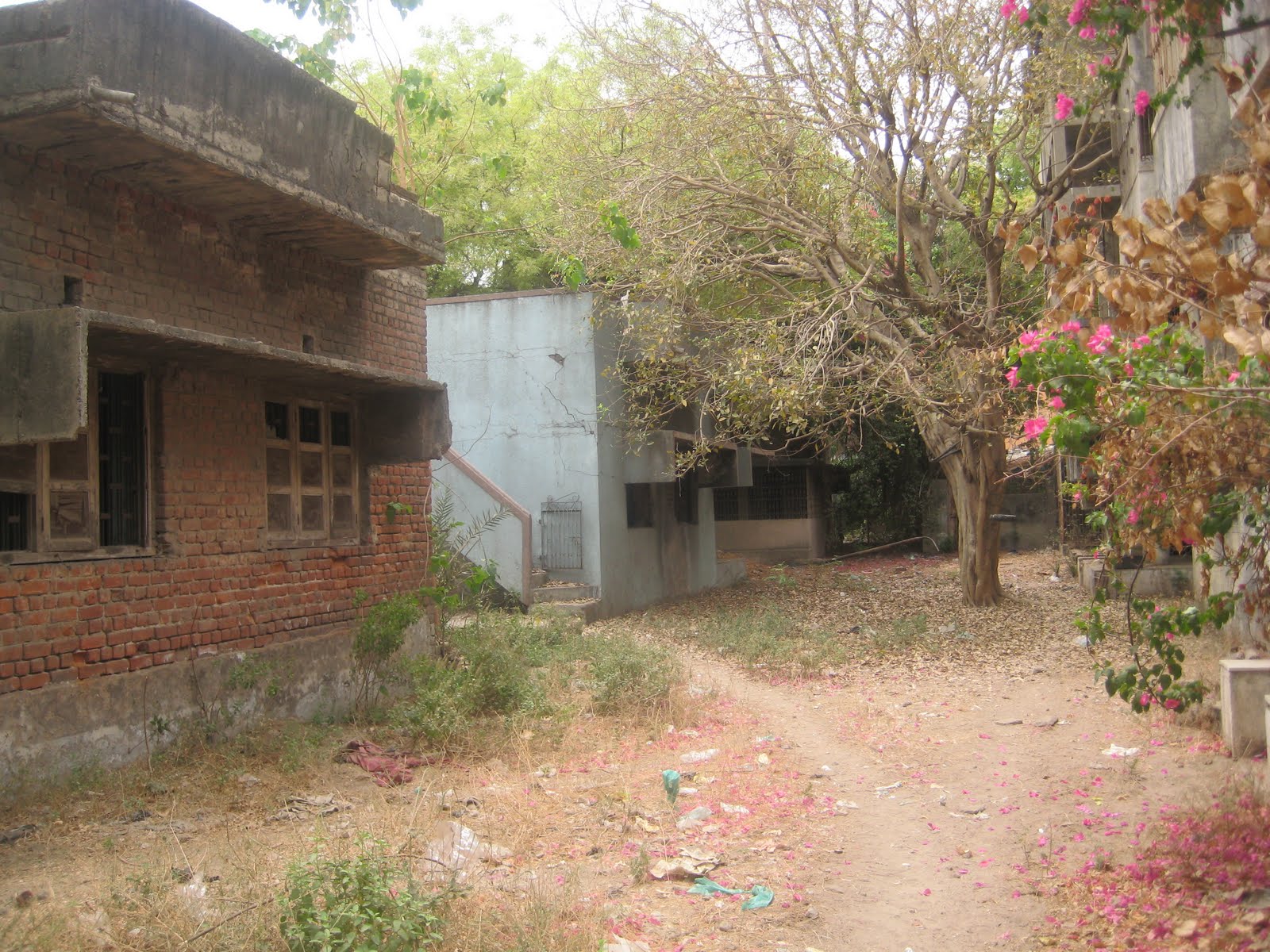


I ask the driver to take me to Naroda Patiya, Naroda Gaun and Gulbaag Colony. The former two are minority Muslim pockets and scars from those couple of days of mayhem are still evident, even after eight years. Drab, dusty and filthy at places, the State has neglected to develop these narrow wandering streets into something even remotely akin to other parts of Ahmedabad or Surat I have seen. What stands out dramatically is the fear on people’s faces, fear of the unknown and the stark possibility of history repeating itself.
It is at Gulbaag Colony that enormity of what transpired hit me quite hard. Just outside the Colony is a hot, busy, bustling street with commerce in full swing. I walk ten steps and stop, as if I have hit a stone wall. The place is deserted, cool and calm and eerie, I gasp; two stray dogs regard me with wary disinterest, then return to napping. The scene is akin to a still from a ghost movie, only here, the presence of lost lives is very real; I involuntarily shiver.
Descriptions from Zakiya Jafri and Firoz Pathan come vividly to mind as I stroll around weed infected lawns and step on piles of rotting leaves. A discarded child’s sandal, a tennis ball, fabric from a torn dress, an empty packet of washing soap, a cricket stump, a laundry clothe line…all reminders of a once normal and dynamic neighborhood. However, what horrifies and depresses me are burnt out rooms of all units I stop at; blackened walls, some with melted clocks, pictures or other artifacts still nailed in, broken, now rotted, half burnt furniture.
I feel I am being watched by the souls of victims that burnt here and shiver again. The driver, feeling similar emotions perhaps, moves away and stands at a distance, conversing with a couple of people. I take few photos fast-fast and join them even faster. These two are vegetable venders who roam around the neighborhood, pushing their wares on a two wheel cart. We chit chat about the events of that day both remember and mourn. One, with a withered face of someone who has been exposed to a lot of sun, speaks freely, expressing similar sentiments I have heard from others. Why the rapes, he asks. Okay, you have an issue with me, take it out on me, hit me, injure me, even kill me. But why rape our women, mothers, wives, daughters? Why, why? The raping of our women in front of our eyes is the most difficult to bear…
My thoughts:
A lot has been said, speculated and written about that fatal incident at Godhra and its aftermath; volumes of pages on the internet and elsewhere. There are some theories that are outright absurd, a few plausible. But when we look at stand alone facts; these glaringly point towards well supported and executed plot against a minority religious population. Consider these facts:
1. Independent forensic evidence point to the fire that begins inside of train, not outside.
2. Bodies of these innocent Hindus slain at Godhra are sent by State authorities to Ahmadabad, some hundred miles away and paraded in front of Hindu mobs to incite revenge.
3. Three radical, extremist and anti-Muslim Hindu groups, the VHP, Baj Rang (youth wing of VHP) and BJP are actively supported by police, encouraging and in some instances actively aiding in the carnage (eye witness accounts as documented by Tehelka, an independent news agency).
4. Arms (knives, swords, fuel, gas cylinders and guns) are quickly assembled and are easily available to anybody who fancies one.
5. A firebrand BJP MLA, Mayaben Kodnani goes riding atop an open Jeep around Ahmadabad all day, urging and inciting Hindu group to take up arms to attack and kill Muslims. The police refuse to arrest her, citing lack of evidence even though another accused testify he was with her all day, inciting others to violence and revenge against Muslims in Naroda Patia and Naroda Gaun.
6. It is only three months after an FIR is registered against the main accused that police make arrests, only for them to easily get bail; these accused are still out and free.
7. Crucial evidence, especially from Naroda Patia and Naroda Gaun is systematically destroyed; the pit where bodies burnt not examined, no forensic samples taken. Dying statements from victims not recorded, postmortem on nearly half the dead not performed (from police records without stating reason of this momentous error); none of the accused is sent in for scientific examinations, no identification of accused by surviving victims done, and many glaring, deliberate destruction of crucial evidence by police and security apparatus as recorded by Tehelka investigators.
8. In spite of so many killings and injuries, in spite of open use of knives, swords, and other armaments, not a single weapon recovered, expect one, a sword.
9. The prime accused, Bajrangi, boasts he is given safe haven at a farm for four months by authorities, then a sympathetic judge grants him bail; he is still out and free.
10. Most damning of all, those in authority visit Naroda Patia and Naroda Gaun twice, once on the day of riots and again next day; garlands rioters and according to the main accused, urges them to do more.
Photographs, in decending order:
1 - 6 Burnt out shells of once vibrant homes.
7 Courtyard of Gulbaag Colony.
8 Home of Zakiya and Ehsaan Jafri.
9 Firoz and Irfaan Phatan.
10 Zakiya Jafri
Wednesday, April 14, 2010
An orgy of blood /A dance for justice – Part two:
Firoz Gulzar Mohammed Pathan (FGMP):
The train from Surat to Ahmedabad next morning is another comfortable ride, on time departure and arrival. Chotubhai Dosani, my host, picks me up and we lunch in style at his home and I have the afternoon free to relax and catch up with piling emails that were almost inaccessible in Surat due to a lousy connection at Ginger Hotel.
Chotubhai is a generous man; he provides me with a chauffeur driven air-conditioned car the next day, a life saver for me, for it is 108F or 42C, enough to sear my behind on the back seat of any rickshaw. I already have an appointment to meet FGMP; he must think of me a lunatic, for I have called him thrice to confirm already. He sounds very cautious, understandably, but after a little persuasion and reassurance, he let me come meet him. We get to FGMP’s garage after a couple of false stops, for its located in somewhat remote part of town. I notice an armed policeman with an enormous beer belly lounging on a charpai just outside the garage; the riffle looks as ancient as him, I wonder about him.
FGMP is a slight man, a gaunt and simple man. He settles me inside his one room garage; I immediately begin sweating for it is already oppressively hot, at only10AM. We chit-chat a little, size each other up. FGMP and only surviving brother co-own a motorbike garage and business is good. His brother Irfaan is the mechanic and he takes care of administration and a crane rental business just recently begun. I gently lead talk to the fateful day; he turns serious and his eyes look everywhere but me. Then, making sure we are out of earshot of the guard outside, he begins his story:
We were a happy family, my mom and pa, a sister and three brothers lived in a modest 2 bedroom home at Gulbaag Society. I was a tailor by profession then but did not go to work that day because of the strike called by Hindu groups in protest against the Godhra incident. We were alert but not overly concerned; we had weathered such events before. It was only when my brother Irfaan came running with news of stone pelting that we realized there was trouble. The stoning subsided after a little while but began again and intensified as they started ramming into our house. It was when the mob outside began hurling acid that I realized the enormity of our danger.
I went out of the house to join others that were defending the society by returning fire using the stones that had come to hurt us; mum and sister protesting, pleading for me not to leave them. After some time, Irfaan was hit on the chest by a sword but he had deflected the force of the blow so it was not fatal, but he was unconscious. As I and others tried to revive him, all hell broke loose and we were scattered. I abandoned Irfaan and ran towards my house, told mum and sis to lock doors and stay inside; I saw mum has packed all our jewelry in a bag. I slammed the doors shut, shouted at mum to lock it and ran; about ten men, murderous rage on their faces were coming at me; one flung a sword at me but missed.
I ran up a nearby flight of stairs to the roof of the building and stayed there, praying the mob would leave my house alone, prayed my parents and siblings would be okay. I wanted to go down but the entire front, back and sides of the society was filled by a rampaging mob of crowds with knives, swords and burning wood sticks. The air was full of thick smoke from burning homes and I could smell the terrible stench of human flesh burning. Then, there was a shift of wind and the smoke cleared a bit; I glimpsed mum in the courtyard, surrounded, the jewelry scattered on the ground, empty bag discarded nearby, the men hitting her…molesting her.
We are interrupted by two motor bikes that come in for repairs; FGMP asks them to return later, when Irfaan is at work, then waits for them to be out of hearing range and resumes.
I waited there on the roof, numb and defeated, until about 7PM when there was quiet; only embers form dying fires and an occasional moan from an injured or dying person remained. I then escaped through railway lines running behind the Society. The railway police would not let me stay at the station so I fled to our mosque and stayed with those in similar predicament for two days before I was allowed to return to Gulbaag Society. It was further two days before a truck full of ice and bodies of my family members was brought to the Society by the police; I identified the remains. We took them to the graveyard, bathed, shrouded and buried whatever remained of them.
I ask about the guard outside; he is State provided, for there are threats from those arrested and now out on bail; threats to keep quiet, to withdraw the cases. But the guard seems useless, I say and laugh, he won’t be able sit up, let alone protect you, I joke. FGMP shrugs his shoulders, the joke either lost on him or he cares not.
What can one do after hearing firsthand accounts of such horror? I am numb with pity and sorrow for this young man in front of me. I console him and speak few words of kindness and share in his pain. Things are looking up for FGMP and Irfaan, economically at least. From the INR200k (about USD4,500) granted by Gujarat government as compensation, they bought this land, built the garage and have spare land they could rent out. Both are married now and have their own families. I bid farewell, promise to keep in touch and leave; there is no sign of the guard outside.
The train from Surat to Ahmedabad next morning is another comfortable ride, on time departure and arrival. Chotubhai Dosani, my host, picks me up and we lunch in style at his home and I have the afternoon free to relax and catch up with piling emails that were almost inaccessible in Surat due to a lousy connection at Ginger Hotel.
Chotubhai is a generous man; he provides me with a chauffeur driven air-conditioned car the next day, a life saver for me, for it is 108F or 42C, enough to sear my behind on the back seat of any rickshaw. I already have an appointment to meet FGMP; he must think of me a lunatic, for I have called him thrice to confirm already. He sounds very cautious, understandably, but after a little persuasion and reassurance, he let me come meet him. We get to FGMP’s garage after a couple of false stops, for its located in somewhat remote part of town. I notice an armed policeman with an enormous beer belly lounging on a charpai just outside the garage; the riffle looks as ancient as him, I wonder about him.
FGMP is a slight man, a gaunt and simple man. He settles me inside his one room garage; I immediately begin sweating for it is already oppressively hot, at only10AM. We chit-chat a little, size each other up. FGMP and only surviving brother co-own a motorbike garage and business is good. His brother Irfaan is the mechanic and he takes care of administration and a crane rental business just recently begun. I gently lead talk to the fateful day; he turns serious and his eyes look everywhere but me. Then, making sure we are out of earshot of the guard outside, he begins his story:
We were a happy family, my mom and pa, a sister and three brothers lived in a modest 2 bedroom home at Gulbaag Society. I was a tailor by profession then but did not go to work that day because of the strike called by Hindu groups in protest against the Godhra incident. We were alert but not overly concerned; we had weathered such events before. It was only when my brother Irfaan came running with news of stone pelting that we realized there was trouble. The stoning subsided after a little while but began again and intensified as they started ramming into our house. It was when the mob outside began hurling acid that I realized the enormity of our danger.
I went out of the house to join others that were defending the society by returning fire using the stones that had come to hurt us; mum and sister protesting, pleading for me not to leave them. After some time, Irfaan was hit on the chest by a sword but he had deflected the force of the blow so it was not fatal, but he was unconscious. As I and others tried to revive him, all hell broke loose and we were scattered. I abandoned Irfaan and ran towards my house, told mum and sis to lock doors and stay inside; I saw mum has packed all our jewelry in a bag. I slammed the doors shut, shouted at mum to lock it and ran; about ten men, murderous rage on their faces were coming at me; one flung a sword at me but missed.
I ran up a nearby flight of stairs to the roof of the building and stayed there, praying the mob would leave my house alone, prayed my parents and siblings would be okay. I wanted to go down but the entire front, back and sides of the society was filled by a rampaging mob of crowds with knives, swords and burning wood sticks. The air was full of thick smoke from burning homes and I could smell the terrible stench of human flesh burning. Then, there was a shift of wind and the smoke cleared a bit; I glimpsed mum in the courtyard, surrounded, the jewelry scattered on the ground, empty bag discarded nearby, the men hitting her…molesting her.
We are interrupted by two motor bikes that come in for repairs; FGMP asks them to return later, when Irfaan is at work, then waits for them to be out of hearing range and resumes.
I waited there on the roof, numb and defeated, until about 7PM when there was quiet; only embers form dying fires and an occasional moan from an injured or dying person remained. I then escaped through railway lines running behind the Society. The railway police would not let me stay at the station so I fled to our mosque and stayed with those in similar predicament for two days before I was allowed to return to Gulbaag Society. It was further two days before a truck full of ice and bodies of my family members was brought to the Society by the police; I identified the remains. We took them to the graveyard, bathed, shrouded and buried whatever remained of them.
I ask about the guard outside; he is State provided, for there are threats from those arrested and now out on bail; threats to keep quiet, to withdraw the cases. But the guard seems useless, I say and laugh, he won’t be able sit up, let alone protect you, I joke. FGMP shrugs his shoulders, the joke either lost on him or he cares not.
What can one do after hearing firsthand accounts of such horror? I am numb with pity and sorrow for this young man in front of me. I console him and speak few words of kindness and share in his pain. Things are looking up for FGMP and Irfaan, economically at least. From the INR200k (about USD4,500) granted by Gujarat government as compensation, they bought this land, built the garage and have spare land they could rent out. Both are married now and have their own families. I bid farewell, promise to keep in touch and leave; there is no sign of the guard outside.
Subscribe to:
Posts (Atom)